
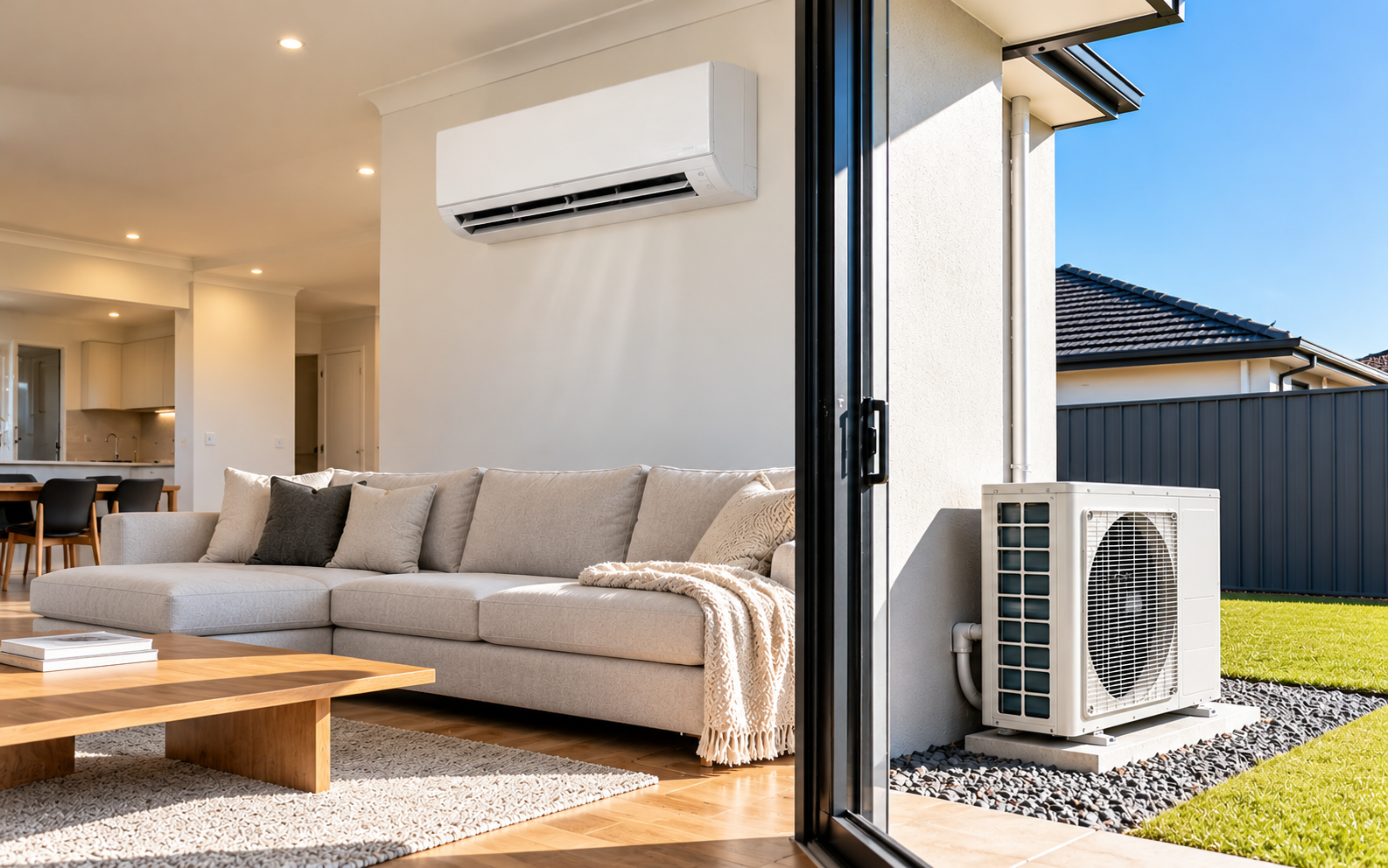
Are you looking for an energy-efficient way to keep your Melbourne home cool in summer and warm in winter? Choosing the right reverse cycle air conditioning Melbourne system can help you enjoy comfortable indoor temperatures throughout the year while managing your household energy costs. Melbourne is known for its unpredictable weather, with hot summer days, cold winter mornings and sudden temperature changes. A reliable heating and cooling system is therefore an important investment for homeowners, renters and businesses. In 2026, reverse cycle air conditioners remain a popular option because they provide both heating and cooling in one system. Modern inverter technology, improved energy efficiency, smart controls and eligible Victorian Government rebates make upgrading worth considering. However, selecting the best system involves more than choosing a brand or comparing advertised prices. You need to consider your home’s size, insulation, room layout, installation requirements and the system’s long-term running costs. This comprehensive reverse cycle air conditioning Melbourne buying guide explains how reverse cycle technology works, the different systems available, indicative installation costs, energy efficiency ratings, government rebates and the important features to compare before purchasing. Whether you’re upgrading an outdated air conditioner, replacing gas heating or installing a new system, this guide will help you make a more informed decision.
What Is Reverse Cycle Air Conditioning Melbourne?
Reverse cycle air conditioning is an electric heating and cooling technology that transfers heat between indoor and outdoor environments. Unlike a traditional cooling-only air conditioner, a reverse cycle system can operate in two modes:
Cooling mode: The air conditioner removes heat from indoor air and transfers it outside, helping maintain a comfortable indoor temperature.
Heating mode: The system extracts heat from outdoor air and transfers it indoors, warming the room even during cold weather. Because the system transfers heat rather than generating all its heating through electric resistance, it can deliver efficient heating and cooling.
Why Choose Reverse Cycle Air Conditioning Melbourne Homes Can Use Year-Round?
Melbourne households often need both heating and cooling. A reverse cycle system provides several potential benefits:
Year-round comfort: Heating and cooling through one appliance.
Energy efficiency: Modern heat pump technology can provide more heat output than the electrical energy it consumes.
Convenient temperature control: Adjust your home’s temperature with a remote control, thermostat or compatible smartphone application.
Flexible installation: Choose from single split, multi-split and ducted configurations.
Potential energy savings: Efficient equipment may reduce running costs compared with older or less efficient appliances.
Reduced gas reliance: Electric reverse cycle systems can replace certain gas space heating appliances.
Government rebate opportunities: Eligible Victorian installations may qualify for discounts under the Victorian Energy Upgrades program.
For households planning long-term heating and cooling improvements, reverse cycle air conditioning offers a flexible solution worth comparing.
Best Types of Reverse Cycle Air Conditioning Melbourne Homeowners Can Choose
The most suitable reverse cycle system depends on the number of rooms you want to heat and cool, your property layout and your available budget. There are three main configurations to consider.
1. Single Split System Reverse Cycle Air Conditioning
A single split system includes one indoor unit and one outdoor unit. It is commonly used to provide heating and cooling for a bedroom, living room, home office or open-plan space.
Key benefits:
Suitable for individual rooms.
Independent temperature control.
Often more affordable than whole-home systems.
Available in various heating and cooling capacities.
Can include inverter technology and Wi-Fi controls.
Usually less disruptive to install than a ducted system.
A single split system can be a practical choice for homeowners who only need heating and cooling in their most frequently used rooms.
2. Multi-Split Reverse Cycle Air Conditioning
Multi-split systems connect several compatible indoor units to one outdoor unit. These systems can provide heating and cooling in multiple rooms while reducing the number of outdoor units required.
Key benefits:
Multiple indoor units connected to a common outdoor system.
Room-by-room temperature control on compatible models.
Suitable for homes with limited outdoor installation space.
Flexible indoor-unit placement.
Useful for townhouses and multi-room residential properties.
However, multi-split systems can have higher installation costs and additional technical requirements compared with a straightforward single split installation. Some systems also restrict whether connected indoor units can heat and cool simultaneously. A professional assessment is important before selecting a multi-split configuration.
3. Ducted Reverse Cycle Air Conditioning
Ducted reverse cycle air conditioning provides centralised heating and cooling through ducts and vents throughout a property. It may be suitable for larger homes requiring temperature control across multiple rooms.
Key benefits:
Whole-home heating and cooling.
Discreet ceiling or floor vents.
Central temperature management.
Zoned operation on compatible systems.
Suitable for new builds and certain major renovations.
Ducted systems generally involve higher upfront installation costs, additional electrical requirements and sufficient ceiling or floor space for ductwork. Careful duct design, insulation and zoning are essential for efficient operation.
Reverse Cycle Air Conditioning Melbourne: System Comparison
| System type | Best suited for | Main consideration |
|---|---|---|
| Single split | Bedrooms, living rooms and individual spaces | Usually the simplest option for one room |
| Multi-split | Several rooms with limited outdoor space | Higher installation complexity |
| Ducted reverse cycle | Whole-home heating and cooling | Higher upfront investment |
The best system is the one that matches your actual heating and cooling requirements rather than simply providing the highest capacity.
How to Choose the Correct Reverse Cycle Air Conditioner Size
Selecting the correct air conditioner size is one of the most important steps in the buying process. Air conditioner capacity is measured in kilowatts (kW). However, the rated cooling capacity and heating capacity of a reverse cycle system may differ. An undersized system may struggle to maintain a comfortable temperature, while an oversized system can increase purchase costs and create inefficient operating conditions.
Reverse Cycle Air Conditioning Melbourne: Recommended System Sizes
The Victorian Government provides the following general guidance for single split and multi-split air conditioning, based on heating output.
| Room size | General recommended heating output |
|---|---|
| Up to 20m² | 2.5–3kW |
| 21–40m² | 3–5kW |
| 41–60m² | 5–8kW |
| More than 60m² | More than 8kW |
These are general recommendations, not a final sizing calculation. Your home’s insulation, room height, building materials, windows and local conditions can change the required capacity.
Factors That Affect Air Conditioner Sizing
Room dimensions Larger rooms generally require more heating and cooling output, but floor area alone is not enough to determine capacity.
Ceiling height Rooms with higher ceilings contain more air and can have different heating and cooling requirements.
Insulation quality Insulated walls, ceilings and floors help reduce unwanted heat loss during winter and heat gain during summer.
Window size and orientation Large, poorly insulated windows and direct sunlight can influence indoor temperatures.
Number of occupants People, appliances and lighting contribute to internal heat loads.
Home layout Open-plan areas and multiple connected rooms can require different system configurations.
Local climate Melbourne’s seasonal heating and cooling conditions should be considered when selecting equipment.
Reverse Cycle Air Conditioning Melbourne: Why Professional Sizing Matters
A professional heating and cooling load assessment evaluates the individual characteristics of your property. Rather than selecting a unit using floor area alone, an installer can consider building construction, insulation, glazing, room orientation, airflow and seasonal conditions. Correct sizing can help improve indoor comfort and reduce unnecessary electricity consumption. The Victorian Government also recommends using professional assessments and appropriate load-calculation tools before choosing a system. For additional guidance, visit the Victorian Government’s reverse cycle air conditioner buying guide.
Reverse Cycle Air Conditioning Melbourne Cost in 2026
Cost is an important consideration when comparing reverse cycle heating and cooling systems. The final price depends on the type of system, equipment capacity, brand, installation complexity and electrical requirements.
Average Reverse Cycle Air Conditioning Installation Prices
The following are indicative 2026 Melbourne market estimates for equipment supplied and installed.
| Reverse cycle system | Indicative installed cost |
|---|---|
| Standard single split system | $1,500–$2,600 |
| Large single split system | $2,600–$4,200 |
| Multi-split system | $3,800–$8,500 |
| Ducted reverse cycle system | $8,000–$15,000 |
Prices are indicative Melbourne market estimates, not fixed Eco Works Australia prices. Actual quotes vary by system size, model and installation. Additional electrical or building work may increase costs.
What Affects Installation Costs?
Several factors can influence the overall price:
The capacity and brand of the air conditioner.
The number of indoor and outdoor units.
The distance between indoor and outdoor equipment.
Electrical circuits and switchboard requirements.
Outdoor-unit mounting and access.
Removal of existing heating or cooling equipment.
Installation on multi-storey buildings.
The need for additional ductwork or zoning.
A standard installation can be less expensive than a complex installation involving extended pipework, specialised access or major electrical upgrades.
Installation Cost vs Long-Term Value
The lowest initial price is not always the most economical choice. A higher-efficiency unit may cost more to purchase but could reduce electricity expenses over its operating life. When comparing quotations, assess:
Upfront equipment cost.
Professional installation charges.
Electricity consumption.
Maintenance requirements.
Manufacturer warranty.
Installation workmanship warranty.
Potential government discounts.
For a more detailed cost breakdown, read Eco Works Australia’s Split System Installation Cost Melbourne: 2026 Price Guide when available on the website.
How Energy Efficient Is Reverse Cycle Air Conditioning?
Reverse cycle air conditioners use heat pump technology to move heat between the outdoor environment and indoor space. This makes them different from conventional electric resistance heaters. For example, under suitable operating conditions, a modern reverse cycle system may transfer approximately three to five units of heat for every unit of electricity used. Actual performance varies with outdoor temperature, equipment quality and operating conditions.
Understanding the Zoned Energy Rating Label
When shopping for reverse cycle air conditioning Melbourne, checking the Australian Zoned Energy Rating Label is an important step. The label provides information about:
Cooling capacity.
Heating capacity.
Cooling and heating star ratings.
Estimated annual electricity consumption.
Performance in different climate zones.
Indoor and outdoor operating noise.
The Australian system uses hot, average and cold climate zones. Choose the relevant climate zone for your postcode, then compare the performance of systems with similar capacities. For Melbourne households, winter heating performance deserves particular attention. You can learn more through the Australian Government Energy Rating website.
Why Inverter Technology Matters
Inverter air conditioners adjust compressor output to better match heating and cooling demand. Instead of operating only at full capacity or switching off, the system can vary its performance to help maintain a desired room temperature. This can provide smoother temperature control and improved efficiency under suitable conditions.
How to Reduce Reverse Cycle Air Conditioning Running Costs
Even an efficient system can consume unnecessary electricity when operated poorly. Practical ways to manage electricity use include:
Set a comfortable, moderate thermostat temperature.
Use timers and scheduling where appropriate.
Keep doors and windows closed when heating or cooling.
Clean air filters according to manufacturer instructions.
Use curtains and blinds to control unwanted heat.
Improve insulation and seal draughts.
Heat or cool occupied rooms rather than unused areas.
Arrange servicing when required.
For summer cooling, the Australian Government suggests considering a thermostat setting around 25–27°C where comfortable, with fans used to improve air circulation. Actual running costs depend on the system’s electrical input, operating hours, electricity tariff and heating or cooling demand.
Reverse Cycle vs Gas Heating: Which Is Better for Melbourne?
Many Melbourne homeowners considering an air conditioning upgrade are also evaluating whether to replace existing gas heating. Reverse cycle air conditioning can provide an efficient electric alternative.
| Feature | Reverse cycle air conditioning | Gas space heating |
|---|---|---|
| Heating | Yes | Yes |
| Cooling | Yes | No |
| Main energy source | Electricity | Gas |
| Uses heat pump technology | Yes | No |
| May qualify for VEU incentives | Eligible approved upgrades | Not as a new gas installation |
| Running costs | Depend on efficiency and tariffs | Depend on gas tariffs and appliance efficiency |
Benefits of Replacing Older Gas Heating
Switching to reverse cycle heating and cooling may help households:
Reduce dependence on gas for space heating.
Combine heating and cooling in one appliance.
Improve temperature control.
Access energy-efficient inverter technology.
Qualify for eligible Victorian Energy Upgrades discounts.
However, actual financial savings depend on the heating equipment being replaced, electricity and gas tariffs, system efficiency and household usage. Homeowners should compare the annual operating costs of their existing and proposed systems before upgrading.
VEU Rebates for Reverse Cycle Air Conditioning Melbourne in 2026
Eligible Victorian households can receive upfront discounts when installing approved high-efficiency reverse cycle air conditioners through the Victorian Energy Upgrades (VEU) program. The scheme encourages households and businesses to replace less efficient heating and cooling equipment.
How Much Is the VEU Air Conditioning Discount?
The Victorian Government provides the following indicative household incentives for eligible installations.
| Existing system | Indicative discount |
|---|---|
| Qualifying non-ducted gas heater | $630–$1,610 |
| Qualifying hard-wired electric resistance room heater | Up to $840 |
| Eligible existing non-ducted reverse cycle system | $210 |
| Approved room installation without decommissioning | $70–$140 |
| Certain qualifying ducted gas heater replacements | Up to $5,530 |
Discounts are conditional on the existing equipment, proposed replacement system, accredited provider and program requirements. The largest ducted discount is not applicable to an ordinary single-room split installation.
Who May Qualify?
Victorian homeowners, businesses and eligible rental properties can participate in the program. Eligibility generally depends on:
Installing an approved high-efficiency reverse cycle system.
Meeting product and performance requirements.
Satisfying any applicable replacement or decommissioning conditions.
Using an accredited provider or an installer partnered with one.
Completing the required documentation.
Residential products used for eligible VEU upgrades must have a minimum five-year warranty.
How to Access a VEU Discount
The process generally involves:
Checking whether your proposed upgrade is eligible.
Contacting a VEU accredited provider or partner installer.
Selecting an approved high-efficiency system.
Receiving a written quote showing the discount.
Arranging the installation through qualified tradespeople.
Completing the required program documentation.
Only an accredited provider can apply the discount under the VEU program. It is important to check eligibility before purchasing or installing equipment.
Important 2026 Program Changes
Updated VEU specifications introduced revised incentive calculations and minimum customer contribution requirements for certain multi-split and ducted reverse cycle installations from 30 September 2026. If you’re considering a larger system, confirm the current requirements and final customer payment before accepting a quote. For detailed eligibility information, visit the Victorian Government heating and cooling discounts page.
Best Features to Look for in Reverse Cycle Air Conditioning Melbourne
Before purchasing, compare equipment based on performance and suitability rather than price alone.
1. Energy Efficiency Ratings
Look for a system with strong heating and cooling performance for the relevant climate zone. Higher energy efficiency can be valuable for households using air conditioning regularly.
2. Appropriate Heating Capacity
Check both the cooling and heating capacities. A model’s heating output may differ from its advertised cooling capacity.
3. Low-Noise Operation
Consider the sound ratings of both indoor and outdoor units. Outdoor equipment should be positioned with appropriate consideration for neighbours and nearby bedrooms.
4. Smart Wi-Fi Controls
Compatible systems can allow users to adjust temperatures and schedules through a mobile application. This can provide convenience, particularly for households with regular heating and cooling routines.
5. Air Filtration Features
Some systems include additional air filtration and cleaning features. Compare manufacturer specifications and maintenance requirements rather than relying only on marketing claims.
6. Warranty Coverage
Review equipment and installation warranties separately. Check the warranty period, servicing conditions, exclusions and whether labour costs are covered.
7. Manufacturer Support
Choose equipment with clear technical specifications, accessible spare parts and suitable local support.
8. Installation Suitability
The best system should fit the property without requiring unnecessary modifications or compromising ventilation, drainage and access.
Common Mistakes When Buying Reverse Cycle Air Conditioning
Homeowners can avoid several expensive mistakes by planning carefully.
Choosing the largest available system Larger capacity does not automatically mean better performance. Oversized equipment can increase upfront costs and may operate inefficiently.
Ignoring winter heating performance Melbourne homeowners should compare winter heating efficiency as well as summer cooling performance.
Buying without a site assessment Room dimensions alone do not always reveal the correct heating and cooling requirements.
Selecting equipment based only on the advertised price Consider long-term energy consumption, warranty conditions and installation costs.
Assuming every installation qualifies for a VEU rebate Only approved systems and qualifying installations are eligible for applicable discounts.
Not checking outdoor-unit placement Poor positioning can affect airflow, operating efficiency, maintenance accessibility and noise.
Ignoring maintenance Dirty filters and poorly maintained equipment can reduce performance over time.
Professional Reverse Cycle Air Conditioning Installation Melbourne
Professional installation is essential to ensure that the selected system operates safely and efficiently. Reverse cycle equipment includes refrigerant circuits and electrical components that require appropriately licensed personnel.
Step 1: Property Assessment
The installation provider reviews the rooms requiring heating and cooling, existing equipment, electrical requirements and potential installation positions.
Step 2: System Recommendation
A suitable model and capacity are selected based on the property’s characteristics and the customer’s budget.
Step 3: Written Quotation
The customer receives a quotation identifying equipment, installation inclusions and any confirmed rebate.
Step 4: Installation
Qualified personnel install the appropriate indoor and outdoor equipment, refrigerant pipework, drainage and electrical connections.
Step 5: Testing and Commissioning
The installer checks system operation, airflow, temperature control and applicable safety requirements.
Step 6: Handover
Customers receive operating guidance, warranty details and relevant compliance documentation. A straightforward single split system installation may be completed within a working day, while multi-split or ducted installations can require more time.
Reverse Cycle Air Conditioning Melbourne: Questions to Ask Before Installation
Before approving a quotation, ask:
What heating and cooling capacity is recommended, and why?
Has a proper heating and cooling load assessment been completed?
What are the system’s energy efficiency ratings?
Is electrical or switchboard work required?
Where will the indoor and outdoor units be installed?
Does the quote include all necessary pipework and drainage?
What are the equipment and installation warranties?
Is the proposed system eligible for a VEU discount?
What additional expenses could arise?
What documents will I receive after installation?
These questions make it easier to compare providers and understand what you’re purchasing.
Why Consider Eco Works Australia for Reverse Cycle Air Conditioning?
Eco Works Australia focuses on energy-efficient air conditioning solutions designed to help households improve year-round comfort. The business promotes home energy assessments, professional installation services and assistance with understanding potential government rebate eligibility. Eco Works Australia’s website also advertises EcoBreeze air conditioning packages for different residential requirements. Homeowners interested in reverse cycle air conditioning Melbourne options can contact the business to discuss:
Suitable heating and cooling equipment.
Different system capacities.
Options for bedrooms and living areas.
Multi-room air conditioning requirements.
Installation quotations.
Potential government rebate eligibility.
Energy-efficient home improvements.
The most suitable solution depends on the size, layout and characteristics of your property. Before accepting a quotation, confirm the proposed equipment model, system configuration, installation inclusions and final payable amount.
Frequently Asked Questions About Reverse Cycle Air Conditioning Melbourne
What Is the Best Reverse Cycle Air Conditioner for Melbourne?
The best system depends on your room size, property insulation, budget and heating and cooling requirements. Look for a correctly sized system with suitable winter heating performance, good energy efficiency ratings and reliable warranty coverage.
Is Reverse Cycle Air Conditioning Good for Melbourne Winters?
Yes. Reverse cycle air conditioners provide heating by transferring heat from outdoor air into the home. Modern systems can operate effectively during cold weather, although actual performance varies by model and outdoor conditions.
How Much Does Reverse Cycle Air Conditioning Cost in Melbourne?
Indicative 2026 installed costs range from approximately $1,500–$2,600 for standard single split systems, with higher costs for larger, multi-split and ducted installations. Your final price will depend on the equipment and property requirements.
Is Reverse Cycle Air Conditioning Cheaper Than Gas Heating?
It can be, particularly when replacing older or inefficient gas heating equipment. However, actual savings depend on electricity tariffs, gas costs, system efficiency and how frequently heating is used.
Can I Get a Government Rebate for Reverse Cycle Air Conditioning?
Yes. Certain approved reverse cycle installations may qualify for discounts through the Victorian Energy Upgrades program. Eligibility and discount values depend on current requirements.
What Size Reverse Cycle Air Conditioner Do I Need?
A smaller room may need approximately 2.5–3kW of heating output, while larger open-plan areas may require significantly more capacity. Professional sizing is recommended.
Does Reverse Cycle Air Conditioning Use a Lot of Electricity?
Electricity consumption varies according to equipment efficiency, system size, insulation, outdoor conditions and operating hours. Efficient reverse cycle systems can provide considerably more heating output than conventional resistance heaters for the same electricity input.
Is a Split System Better Than Ducted Air Conditioning?
A single split system may be more economical for individual rooms. Ducted reverse cycle air conditioning is more suitable for certain whole-home applications but generally has higher upfront costs.
Can Reverse Cycle Air Conditioning Replace Gas Ducted Heating?
Yes, a properly designed reverse cycle system can replace gas heating. The most suitable configuration depends on the property, existing ductwork, room requirements and installation conditions.
How Long Does a Reverse Cycle Air Conditioner Last?
A well-maintained system may last around 10–15 years, although actual service life depends on the equipment, maintenance and operating conditions.
Does Reverse Cycle Air Conditioning Need Regular Servicing?
Filters should be cleaned according to the manufacturer’s recommendations. Periodic professional servicing may also be required to maintain performance and meet certain warranty conditions.
Can I Install a Reverse Cycle Air Conditioner Myself?
Refrigerant-related work and regulated electrical installation must be undertaken by appropriately licensed personnel. Professional installation helps ensure safe operation and compliance.
Final Thoughts: Choose the Best Reverse Cycle Air Conditioning Melbourne Solution
Investing in reverse cycle air conditioning Melbourne can be a practical way to improve year-round comfort while managing household energy consumption. From single split systems for individual rooms to multi-split and ducted solutions for larger homes, there are several configurations available. The best choice depends on your heating and cooling requirements, property layout, equipment efficiency and overall budget. Before purchasing, compare system specifications, request a professional assessment and explore any available Victorian Energy Upgrades discounts. Choosing a suitably sized, professionally installed reverse cycle system can help deliver efficient, dependable heating and cooling for years to come.
Ready to explore reverse cycle air conditioning for your Melbourne home? Contact Eco Works Australia to discuss your heating and cooling requirements and request a free assessment.
Installation prices, system availability, expected energy savings and government discounts depend on individual circumstances. Always confirm specifications, eligibility and final costs through a written quotation. Information reviewed in October 2026.